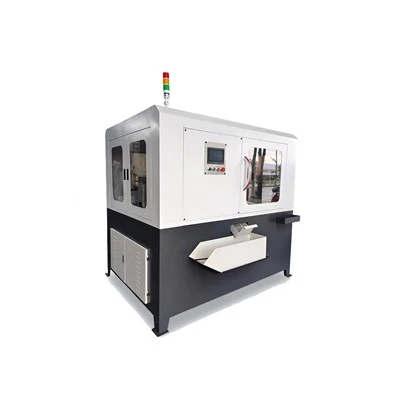
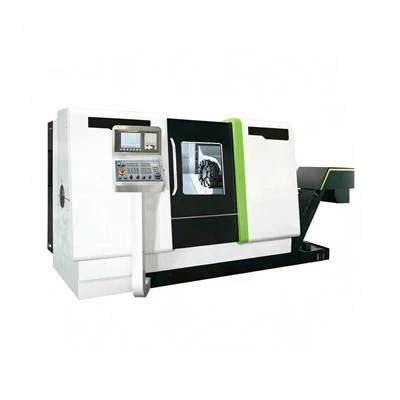
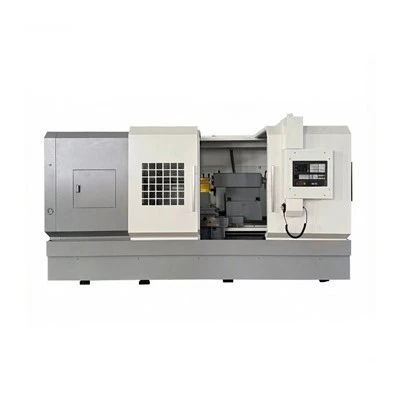
Hey there! As a supplier of CNC machine tools, I'm super excited to share with you how these amazing machines work. CNC, which stands for Computer Numerical Control, has revolutionized the manufacturing industry. It allows for highly precise and efficient machining operations, making it a must - have for many businesses.
Let's start with the basics. A CNC machine tool is a manufacturing device that uses computerized controls to operate and manipulate machine shop tools. These tools can be mills, lathes, routers, grinders, and more. The key difference between a traditional machine tool and a CNC machine tool is the level of automation and precision that the CNC offers.
The Core Components of a CNC Machine Tool
First off, we've got the control system. This is the brain of the CNC machine. It's a computer that runs specialized software. The software interprets a set of instructions called G - code. G - code is like a recipe for the machine, telling it exactly what to do, where to move, and how fast. You can create G - code using CAD (Computer - Aided Design) and CAM (Computer - Aided Manufacturing) software. With CAD, you design the part you want to make in a 3D virtual environment. Then, CAM software takes that design and converts it into G - code.
The drive system is another crucial part. It's responsible for moving the different axes of the machine. Most CNC machines have at least three axes: X, Y, and Z. The X - axis usually controls left - to - right movement, the Y - axis controls forward - and - backward movement, and the Z - axis controls the up - and - down movement. The drive system uses motors, which can be either servo motors or stepper motors. Servo motors are more precise and can deliver more power, making them a popular choice for high - end CNC machines. Stepper motors are simpler and less expensive, but they're not as precise.
The machine tool itself is the part that actually does the cutting or shaping. Depending on the type of CNC machine, this can be a milling cutter on a CNC mill, a cutting tool on a lathe, or a router bit on a CNC router. The machine tool is held in a toolholder, which attaches it to the spindle. The spindle is the part of the machine that rotates the tool at high speeds.
How it All Works in Action
Once you've got your G - code ready, you load it into the control system of the CNC machine. The operator then sets up the workpiece on the machine's table or chuck. This step is super important because if the workpiece isn't properly aligned, the final part won't be accurate.
After the setup, the operator starts the machine. The control system reads the G - code line by line. For each line, it sends signals to the drive system. The drive system moves the axes of the machine according to the instructions in the G - code. At the same time, the spindle rotates the cutting tool at the specified speed. The cutting tool then removes material from the workpiece to create the desired shape.
Throughout the process, sensors on the machine monitor things like the position of the axes, the speed of the spindle, and the amount of force being applied to the cutting tool. If something goes wrong, like the tool breaking or the machine going out of position, these sensors can send signals back to the control system. The control system can then stop the machine to prevent damage.


Different Types of CNC Machine Tools and Their Working Principles
1. CNC Mill
A Bench Top CNC Mill is a great option for small - scale or hobbyist applications. In a CNC mill, the cutting tool rotates while the workpiece remains stationary (or vice - versa, depending on the design). The control system moves the table holding the workpiece along the X, Y, and Z axes to create complex shapes. It can drill holes, mill flat surfaces, and create three - dimensional contours.
2. Lathes
- Box - way Lathe: In a box - way lathe, the workpiece rotates, and the cutting tool moves along the X and Z axes to remove material. Box - way lathes are known for their rigidity, which makes them suitable for heavy - duty cutting operations.
- Horizontal Lathe with Slant Bed: This type of lathe has a slanted bed, which offers better chip evacuation and easier access to the workpiece. It also provides increased rigidity and accuracy, making it ideal for high - precision turning operations.
- Horizontal Lathe with Flat Guideways: Horizontal lathes with flat guideways are more cost - effective. They're great for general - purpose turning and are often used in small - to - medium - sized manufacturing shops.
- Double - column Vertical Lathe: Double - column vertical lathes are used for large - diameter workpieces. The workpiece is held vertically, and the cutting tool moves along the X and Z axes. The double - column design provides extra stability, allowing for accurate machining of heavy parts.
Advantages of Using CNC Machine Tools
One of the biggest advantages of CNC machine tools is precision. With the ability to control the movement of the axes to within thousandths of an inch, these machines can produce parts with extremely high accuracy. This is crucial in industries like aerospace and medical device manufacturing, where even the smallest error can have serious consequences.
Another advantage is efficiency. CNC machines can run continuously for hours or even days without the need for constant human intervention. Once the machine is set up and the program is loaded, it can produce multiple parts with the same high level of quality. This reduces labor costs and increases production speed.
CNC machines also offer flexibility. You can easily change the program to produce different parts. This means you don't have to invest in new machinery every time you need to change your product line. It's as simple as loading a new G - code program into the control system.
Why Choose Our CNC Machine Tools
As a supplier of CNC machine tools, we offer a wide range of high - quality machines to meet your specific needs. Our machines are built with the latest technology and are designed to be reliable and easy to use. We also provide excellent customer support, including training and after - sales service.
Whether you're a small - scale manufacturer looking for a Bench Top CNC Mill or a large - scale industrial company in need of a Double - column Vertical Lathe, we've got you covered. Our experienced team can help you choose the right machine for your application and ensure that you get the most out of it.
If you're interested in purchasing CNC machine tools or want to learn more about how they can benefit your business, don't hesitate to reach out. Contact us today to start a conversation about your procurement needs.
References
- "CNC Machining Handbook" by Oberg and others
- Online resources on CNC machine technology and manufacturing processes.