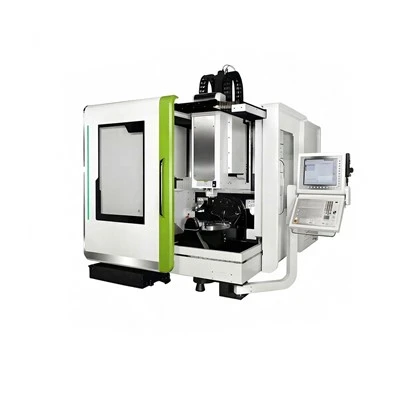
In the dynamic landscape of manufacturing, 5 Axis Turning Center technology has emerged as a game - changer, revolutionizing the way complex parts are machined. As a leading supplier of 5 Axis Turning Centers, I've witnessed firsthand the remarkable progress and innovation in this field. In this blog, I'll delve into the latest developments in 5 Axis Turning Center technology and explore how they are shaping the future of precision machining.
Enhanced Precision and Accuracy
One of the most significant advancements in 5 Axis Turning Center technology is the improvement in precision and accuracy. Modern 5 Axis Turning Centers are equipped with state - of - the - art control systems and high - precision components that enable them to achieve micron - level accuracy. This is crucial for industries such as aerospace, automotive, and medical, where even the slightest deviation can have serious consequences.
Advanced control algorithms and real - time monitoring systems ensure that the machining process is constantly optimized. For example, the use of adaptive control technology allows the machine to adjust cutting parameters based on the actual cutting conditions, such as tool wear and workpiece material properties. This not only improves the quality of the finished product but also extends the tool life, reducing production costs.
Increased Productivity
Productivity is a key concern for manufacturers, and 5 Axis Turning Centers are designed to address this issue. With the ability to perform multiple operations in a single setup, these machines significantly reduce the production time. For instance, a 5 Axis Turning Center can perform turning, milling, drilling, and tapping operations all in one go, eliminating the need for multiple setups and reducing the handling time between operations.
Moreover, the latest 5 Axis Turning Centers are equipped with high - speed spindles and rapid traverse rates. These features enable the machine to move quickly between different machining positions, further increasing the productivity. Some machines also come with automatic tool changers, which can swap tools in a matter of seconds, minimizing the downtime during the machining process.
Improved Flexibility
Flexibility is another area where 5 Axis Turning Center technology has seen significant progress. These machines can handle a wide range of workpiece geometries and materials, making them suitable for a variety of applications. Whether it's a complex aerospace component or a small medical implant, a 5 Axis Turning Center can be programmed to machine it with high precision.
The ability to tilt and rotate the workpiece in multiple axes allows for more complex machining operations. This means that manufacturers can produce parts with undercuts, internal features, and complex contours that were previously difficult or impossible to machine. For example, a 5 Axis Gantry CNC Machine can be used for large - scale machining projects, offering greater flexibility in terms of workpiece size and shape.
Integration of Automation
Automation is becoming increasingly important in the manufacturing industry, and 5 Axis Turning Centers are no exception. The latest machines are designed to be easily integrated with automated systems, such as robotic loaders and conveyors. This allows for continuous, unmanned operation, increasing the efficiency and reducing the labor costs.


Robotic loaders can load and unload workpieces from the machine, while conveyors can transport the finished parts to the next stage of the production process. In addition, some 5 Axis Turning Centers are equipped with in - process inspection systems, which can automatically measure the dimensions of the workpiece during the machining process. If any deviations are detected, the machine can make real - time adjustments to ensure the quality of the finished product.
Energy Efficiency
In today's environmentally conscious world, energy efficiency is a major consideration for manufacturers. The latest 5 Axis Turning Centers are designed with energy - saving features to reduce the power consumption. For example, some machines use variable - speed drives for the spindles and motors, which can adjust the power output based on the actual machining requirements.
In addition, the use of advanced materials and design techniques in the construction of the machine helps to reduce the weight and inertia, further improving the energy efficiency. This not only reduces the operating costs but also has a positive impact on the environment.
Application in New Industries
The advancements in 5 Axis Turning Center technology have also opened up new opportunities in various industries. For example, in the renewable energy sector, these machines are used to manufacture components for wind turbines and solar panels. The ability to machine complex shapes and high - precision parts is essential for the efficient operation of these renewable energy systems.
In the consumer electronics industry, 5 Axis Turning Centers are used to produce parts for smartphones, tablets, and other devices. The demand for smaller, lighter, and more powerful devices has led to the need for high - precision machining, which can be achieved with 5 Axis Turning Centers.
Comparison with Other Machine Tools
When compared to other machine tools such as Box - way Lathe, Single - column Vertical Lathe, Horizontal Lathe with Flat Guideways, and CNC Gantry Machining Center, 5 Axis Turning Centers offer several advantages.
While traditional lathes are mainly used for turning operations, 5 Axis Turning Centers can perform a wider range of operations, including milling and drilling. This makes them more versatile and suitable for complex part machining. In addition, the ability to tilt and rotate the workpiece in multiple axes allows for more efficient machining of complex geometries, which may be difficult or impossible to achieve with other machine tools.
Future Trends
Looking ahead, the future of 5 Axis Turning Center technology looks promising. We can expect to see further improvements in precision, productivity, and flexibility. The integration of artificial intelligence and machine learning technologies will enable the machines to self - optimize and adapt to changing machining conditions in real - time.
In addition, the development of new materials and cutting tools will allow for even faster and more efficient machining. The use of additive manufacturing techniques in combination with 5 Axis Turning Centers may also open up new possibilities for producing complex parts with unique properties.
Conclusion
As a supplier of 5 Axis Turning Centers, I'm excited about the latest developments in this technology. The advancements in precision, productivity, flexibility, automation, and energy efficiency are making these machines an essential tool for modern manufacturing. Whether you're in the aerospace, automotive, medical, or any other industry, a 5 Axis Turning Center can help you improve the quality of your products, increase your productivity, and reduce your production costs.
If you're interested in learning more about our 5 Axis Turning Centers or would like to discuss your specific machining requirements, I encourage you to reach out to us. We're here to provide you with the best solutions and support to meet your manufacturing needs.
References
- "Advanced Manufacturing Technology" by John T. Black
- "CNC Machining Handbook" by Mark A. Givens
- Industry reports on 5 Axis Turning Center technology from leading research firms.